Where a diagnosed problem becomes something real
The SenseConnect Lab is where a structured problem, already checked against the market through a Quest, turns into a tested prototype and an implementation roadmap your team can actually execute.
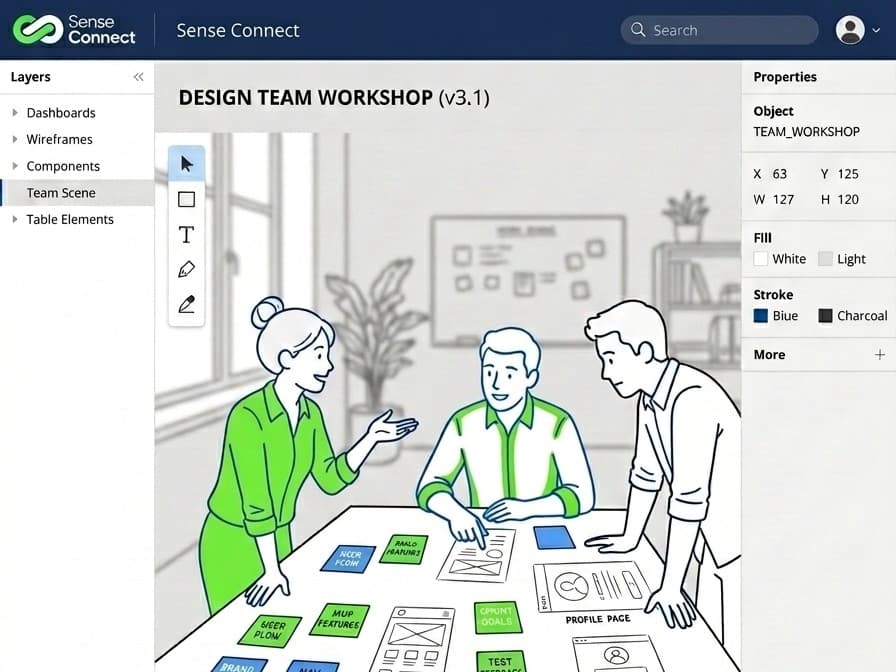
Why the Lab exists
It never starts from a blank page
Every other design studio starts an engagement by asking what you want built. The Lab starts from what's already been diagnosed and checked.
What comes in from Intelligence
The verified knowledge base, company, sector, and regulatory signal the Lab designs against instead of guessing.
What comes in from Quest
A diagnosed problem with a clear decision already made: this is worth building, and here's what similar businesses have done.
What the Lab does with it
Designs, prototypes, and builds the solution, then feeds the outcome back into the knowledge base as the next Quest's baseline.
What we design and build
Five ways a Lab engagement can run
Every engagement starts from the same place: a problem that's already been checked against the market through a Quest.
Product design sprints
Redesign a startup product using real user and market intelligence, from rapid prototype to validated solution.
Service design
Map the current state, find the friction, and prototype the future state of how a service is delivered.
Go-to-market design
A market entry approach informed by intelligence on what has actually worked in that specific market.
Business model design
Alternative models designed with market intelligence for a business whose current model is under pressure.
Digital transformation roadmaps
A digitisation roadmap for traditional businesses, informed by what similar African businesses have actually done.
The process
Eight stages, one continuous line from diagnosis to delivery
Research
Ground the engagement in the diagnostic brief and close any open questions from the Quest.
Strategy
Define what success looks like and which direction is worth prototyping first.
Design Sprint
Generate and stress-test solution directions against the market data on hand.
Prototype
Build something testable, then validate it with real users before committing further.
Architecture
Define the technical shape of the solution and how data will flow through it.
Implementation Roadmap
Sequence the build, plan the team, and price the work, timeline, budget, risk register.
Delivery
Build and ship, with the same market discipline that shaped the diagnostic brief.
Continuous Intelligence
Outcomes are tracked and fed back into the knowledge base, sharpening the next Quest.
After delivery, outcomes are tracked and fed back into the knowledge base as a case study, so the next Quest that looks like yours starts from an even stronger baseline. A handful of completed engagements are documented in Projects.
Where to start
A Lab engagement always begins with a Quest
There is no direct-to-Lab intake. If you already know the problem is worth building, the fastest way in is still to submit a Quest , we'll tell you within two business days whether it's Lab-ready, and what a prototype phase would look like.
Have a problem ready for the Lab?
Lab engagements start from a Quest, submit yours and we'll tell you if it's Lab-ready.